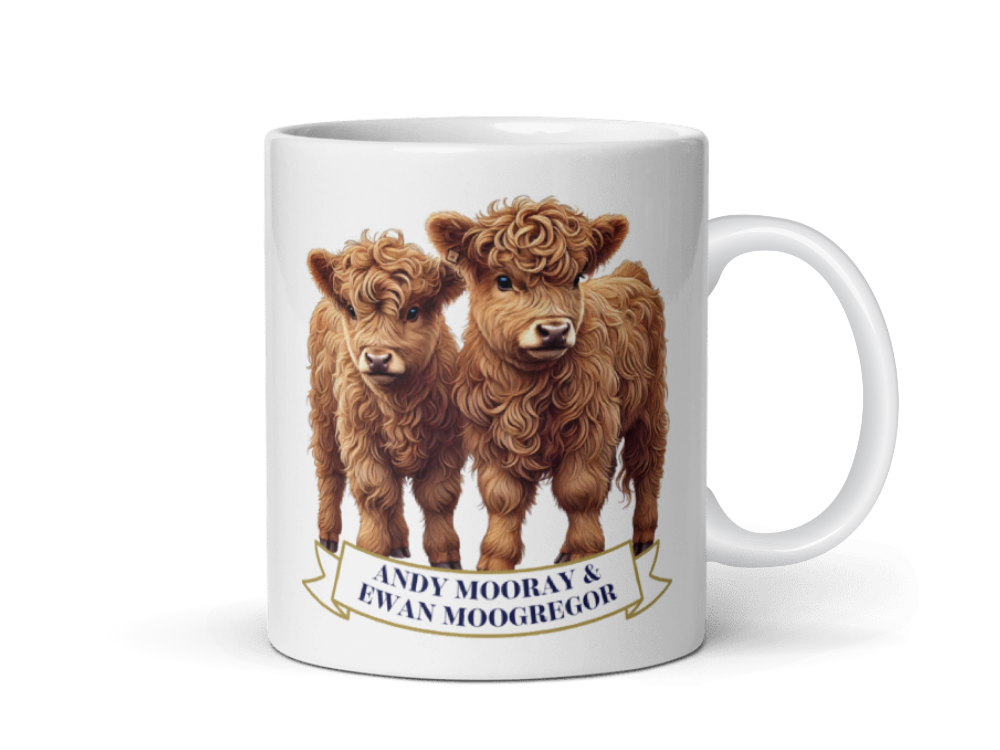


Your Highland Cow
The Highlands just wouldn’t be the same without these amazing animals. Our beautiful Highland cattle live at the Highland Titles Nature Reserve in Duror, near Glencoe.

What do the Highland cows do?
They play a crucial role in maintaining the health and biodiversity of the land. These gentle giants help manage the vegetation, ensuring that the ecosystem remains balanced and vibrant. Their grazing habits promote the growth of native plants, which in turn supports a wide variety of wildlife. By adopting a Highland cow, you’re directly contributing to the conservation of this unique environment.

Can I visit my adopted Highland cow?
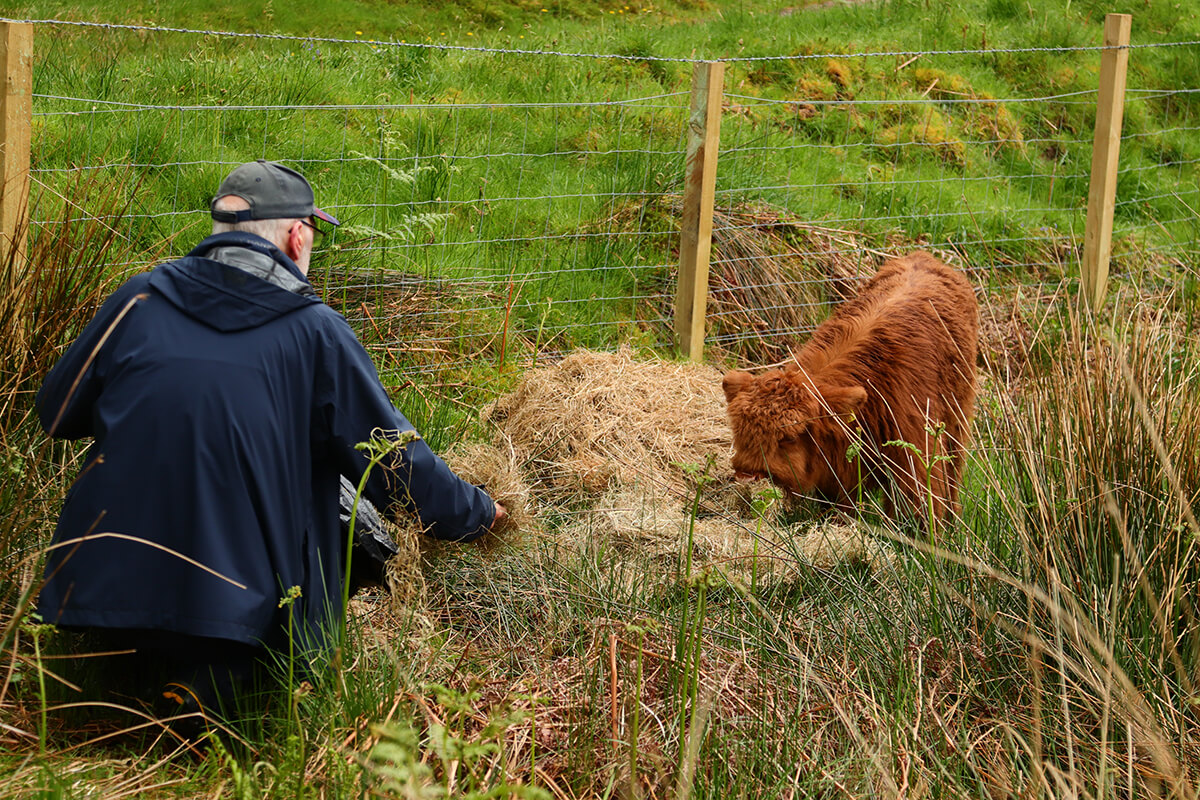
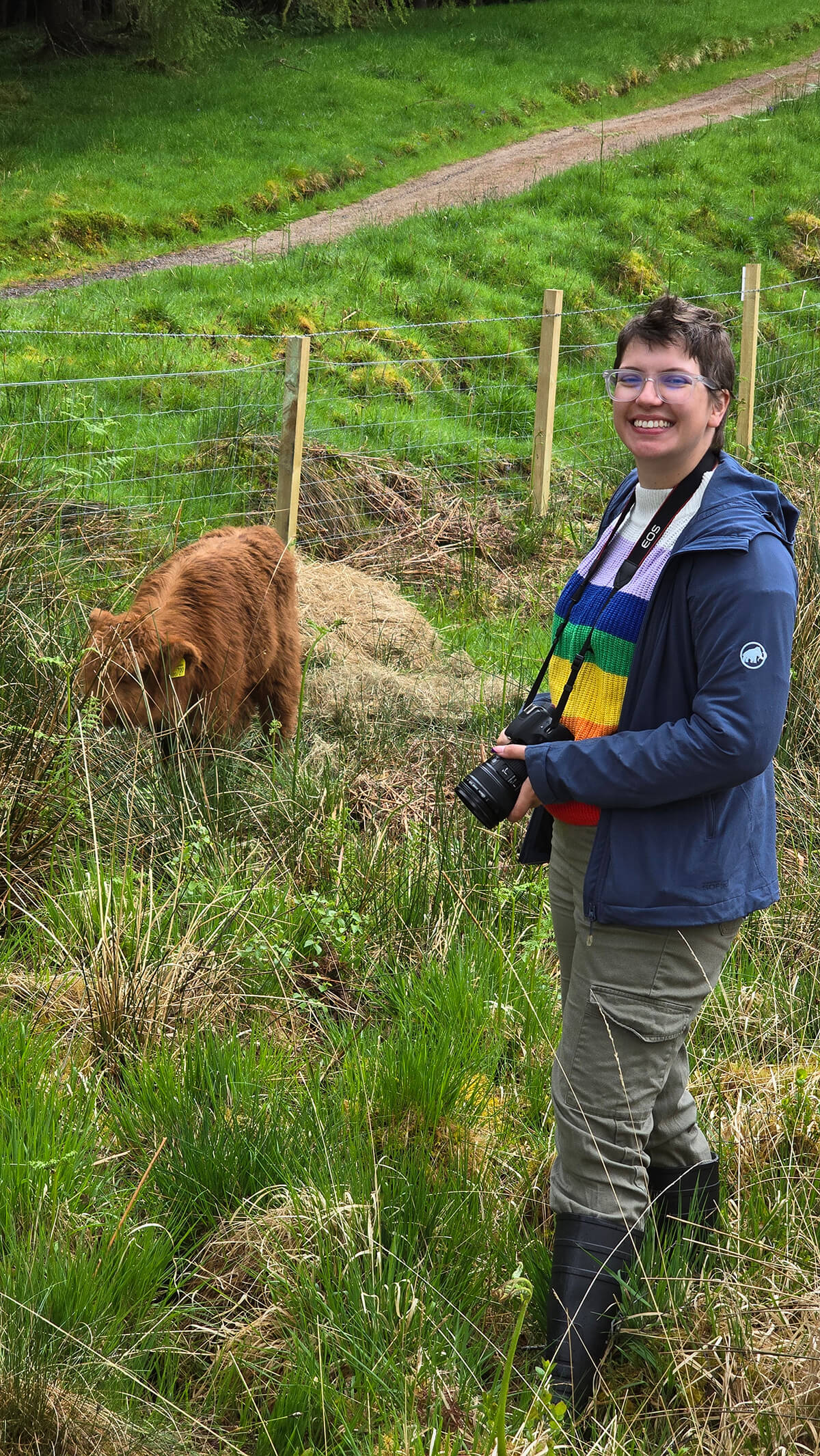
Yes, of course! You can visit any time, but if you want a Guided Tour then please buy tickets and arrange a visiting time with our nature reserve staff.

How does my donation help?
Your donation directly contributes to the costs of keeping the cows, including….
Feed: We need to ensure our cows have a balanced diet to keep them nice and healthy.
Veterinary Care: Providing regular health check-ups and treatments to prevent and manage any illnesses.
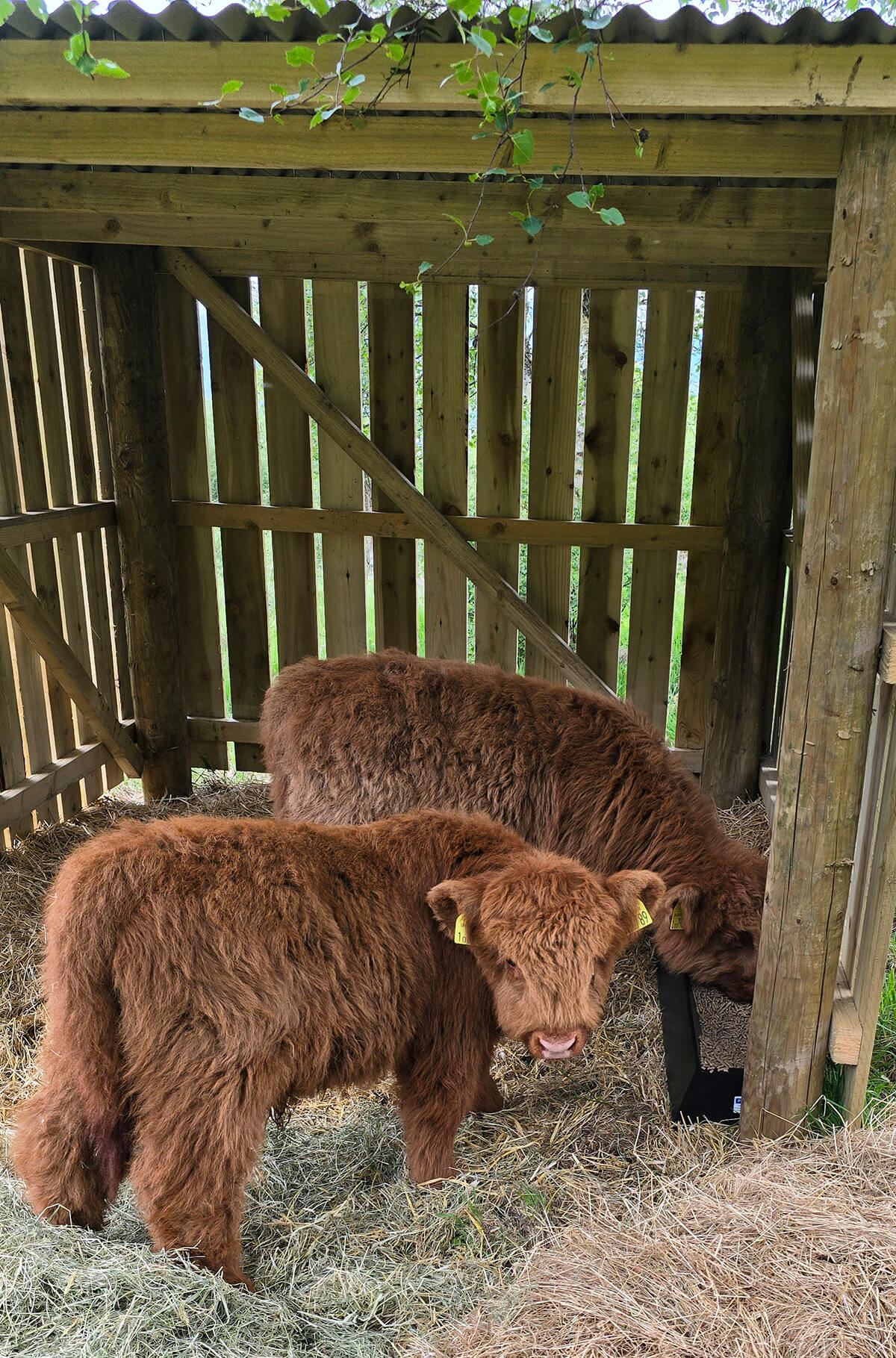
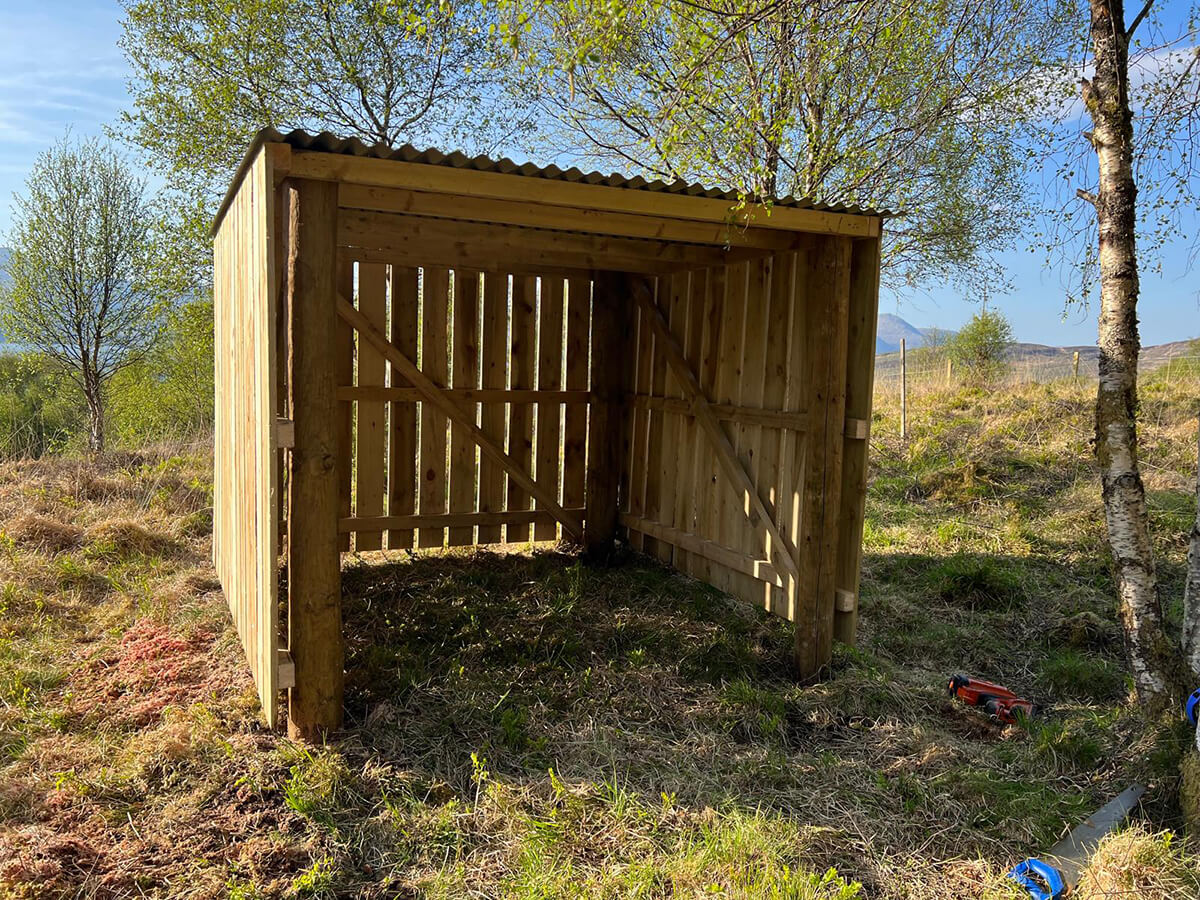
Shelter and Maintenance: Maintaining comfortable and safe shelters for the cows, especially during harsh weather conditions.

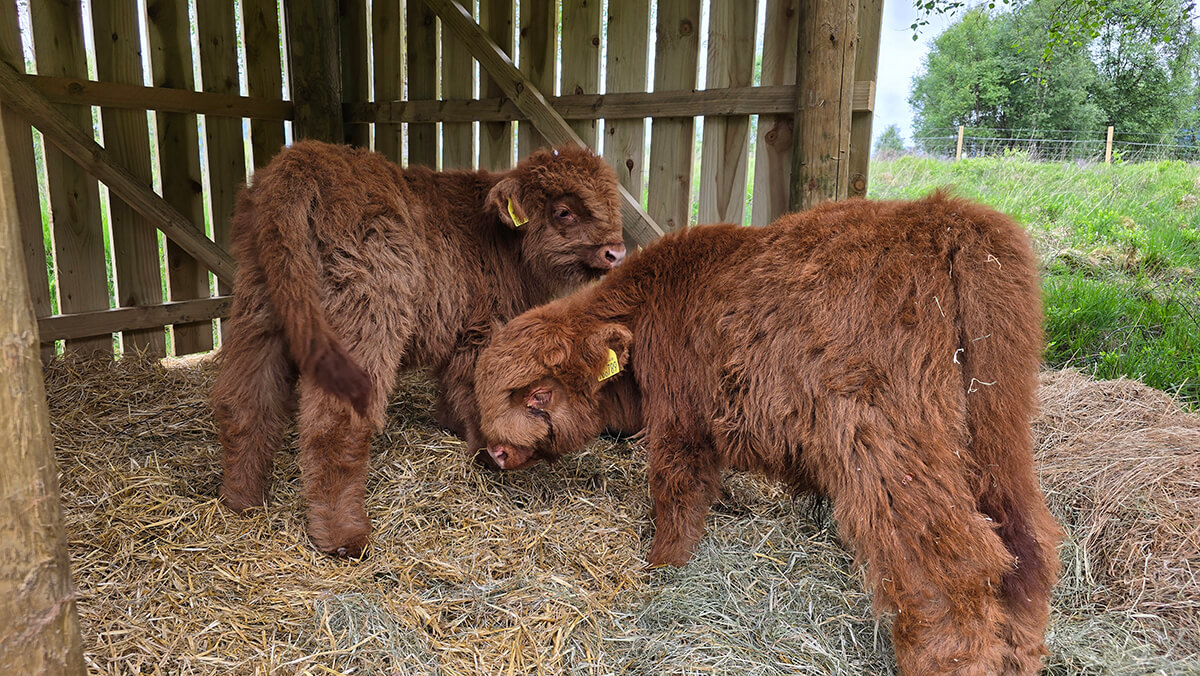
The backstory to ‘The Boys’
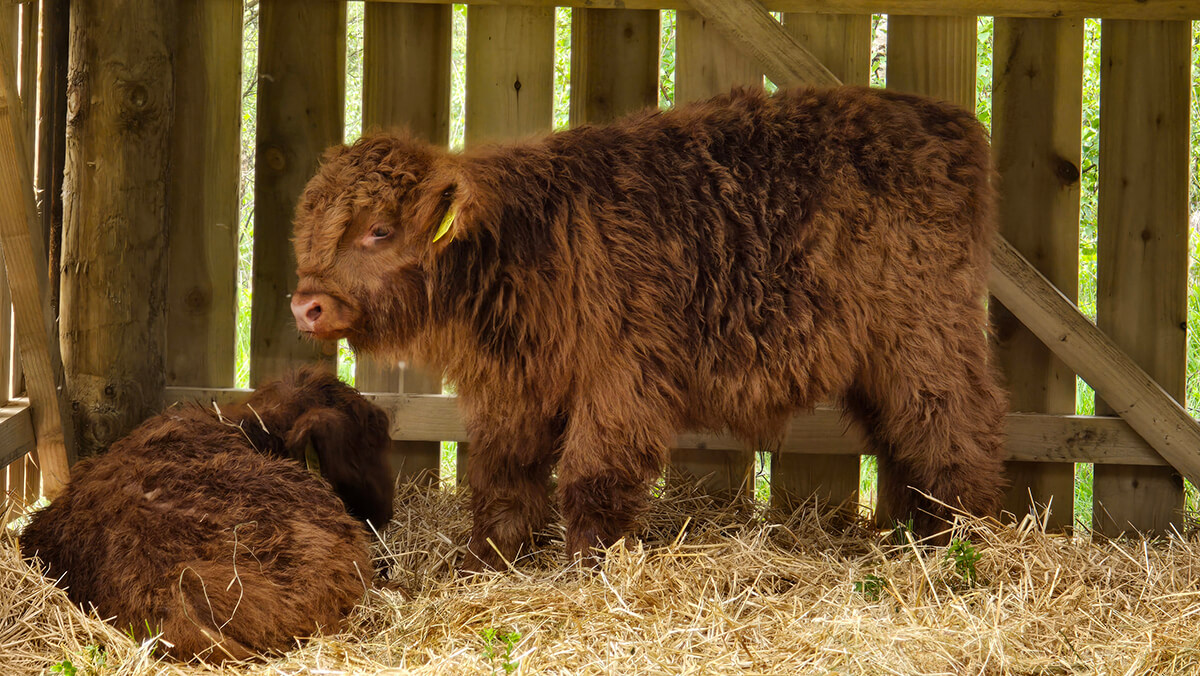
They were born on 1st March 2024 and they are twins.
It was a very shaky start as Mum was a ‘first-time calver’ and it turned out she did not have enough milk for the boys and just left them. Shannon, who used to work at the Reserve, had to take them in as orphans.

Latest Updates

December 2025
“December already!”
Before we dive into this month’s update, we want to begin with a heartfelt thank you to everyone who has supported our work this year – especially those who have adopted our Highland boys or joined us on a Guided Tour to visit the Reserve and meet Donald, Andy, and Ewan up close.
It’s hard to believe that Donald has been with us for almost a year now. After a slightly shaky start, he has truly settled in and is very much one of the boys! All three are now around 19 months old, and it’s impossible to imagine the Reserve without them – they’re real characters and a joy to care for.
Every penny of support goes directly towards their (considerable!) upkeep: fencing, veterinary care, mountains of food, and even a new crush cage to ensure the boys can be handled safely.
This month, we’ve added two new videos to the gallery.
• The first is for all new Adopt-a-Cow recipients and features the arrival of all three boys, along with beautiful recent drone footage from one of our Guided Tours.
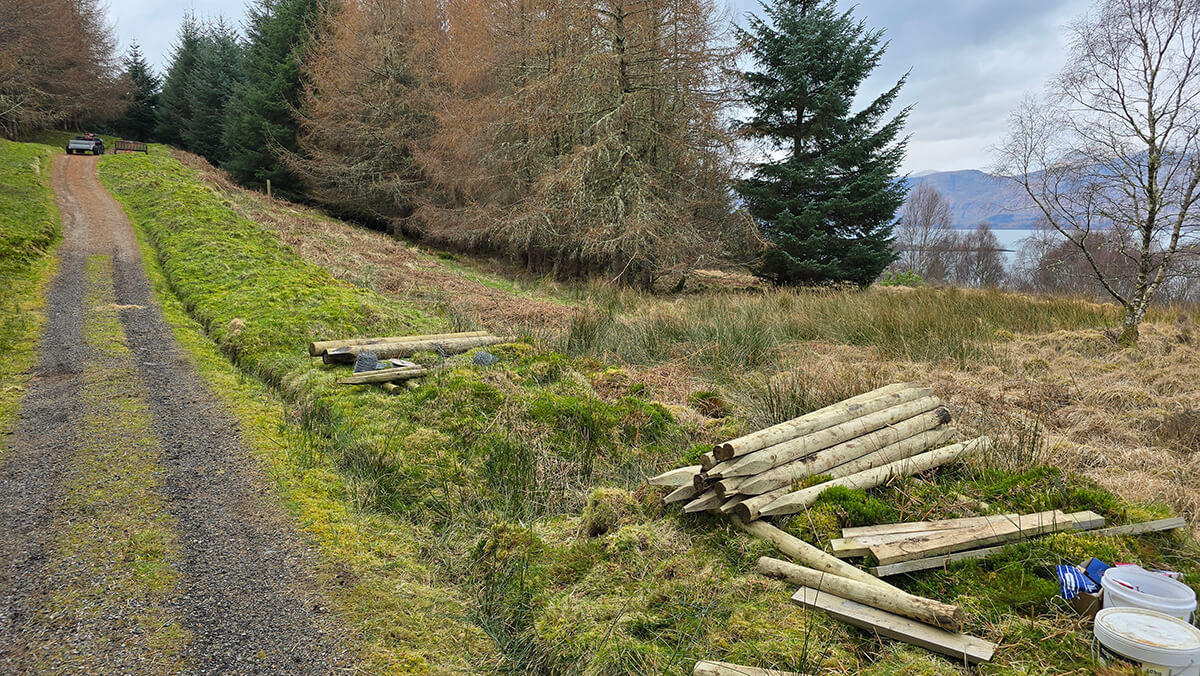
• The second captures the exact moment we “cut the fence” to allow the boys into the new extension of their second enclosure. This additional space was built using recycled posts and wire from their original area, which had simply become too wet. In true Highland style, the boys ignored the food bag entirely and came straight over to greet our Estate Manager, Stewart first – something that touched him deeply. The extra room seems to have put a real spring in their step.
Thank you again for your incredible support throughout the year. We look forward to sharing more updates with you in 2026!

November 2025
“Who’s Who in the Moo Crew?”
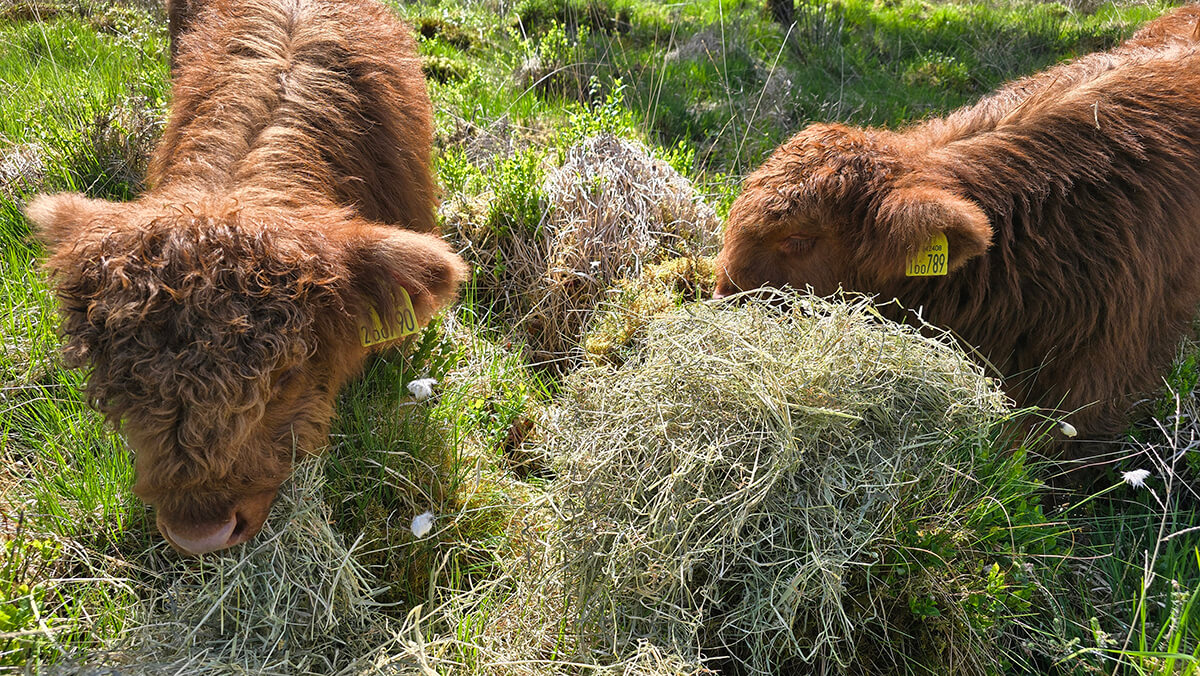
The question we’re asked most often on our cow tours is, “How do you know which one is which?” You’d think it would be easy, but it actually changes with the seasons – and as they’ve grown, each of our Highland boys has developed his own quirks and charms.
In the summer months, Ewan is the lightest in colour, his coat taking on a lovely golden hue that glows in the sunshine. Come winter, though, he’s the one with the most tangles, as he never seems to shed as much as the others. His thick, shaggy mane gives him a proper wild Highland look.
Donald is the easiest to spot. The farm he came from trimmed his dossan (the long fringe Highland cows usually have to shield their eyes from wind, rain, and midges). As a result, you can see his eyes clearly, which makes him look wonderfully expressive (and sometimes a little too knowing!).
Andy is usually the hardest to identify, often through process of elimination once the others are accounted for. He has the darkest coat of the trio and a calm, steady temperament that keeps the peace – most of the time!
Personality-wise, Ewan is our gentle soul, Donald the reformed rascal, and Andy the quiet observer who occasionally joins the mischief. If Stewart, our Estates Manager, had to choose a favourite (don’t tell the others!), it would be Donald. Earning his trust took time, but now he’s a big softie who loves a good brush and a bit of attention.
Next time you visit, see if you can tell them apart – once you know their little quirks, it’s easy to see that each has a personality as distinctive as their horns.

October 2025
“Vets, Bees and Visits!”
What a month it’s been for our Highlanders! From vet visits to buzzing bees, there’s never a dull moment on the reserve. Following last month’s veterinary visit, we’re delighted to share that all three coos received a clean bill of health. The next item on our list for the boys is a special cattle crush, designed for Highlanders and their horns. Future adoptions and donations will help us make this possible.
Work on the new enclosure has paused temporarily after one of our resident bee hives turned a little feisty, giving our contractors a few unwanted stings! The hive is now being safely relocated so work can continue soon.
Meanwhile, our cow tours are proving increasingly popular. To avoid disappointment, please book well in advance by emailing [email protected]
At 18 months old and weighing 350-400Kg, the boys are really showing their personalities: Ewan – still our fluffy softie, often nudged aside by the others; Andy – finding his place among the trio with confidence; Donald – once “the terror,” now a gentle giant (who’s taught Andy to be more assertive!) Thank you to everyone supporting them – it makes all the difference.

September 2025
“Poops, hooves & Highland shenanigans – life with the cows is never dull!”
It’s been a busy time with the cows! They’ve been with us for over a year now, so it was time for the grand ‘poop collection’. A couple of days spent waiting on the right moment for samples, followed by a vet visit for a quick wee jag all round (jab/injection for the non-Scots). The boys weren’t too impressed with that part! As a result we’re putting together a strong, safe handling area to make things easier for them (and us!) as they grow.
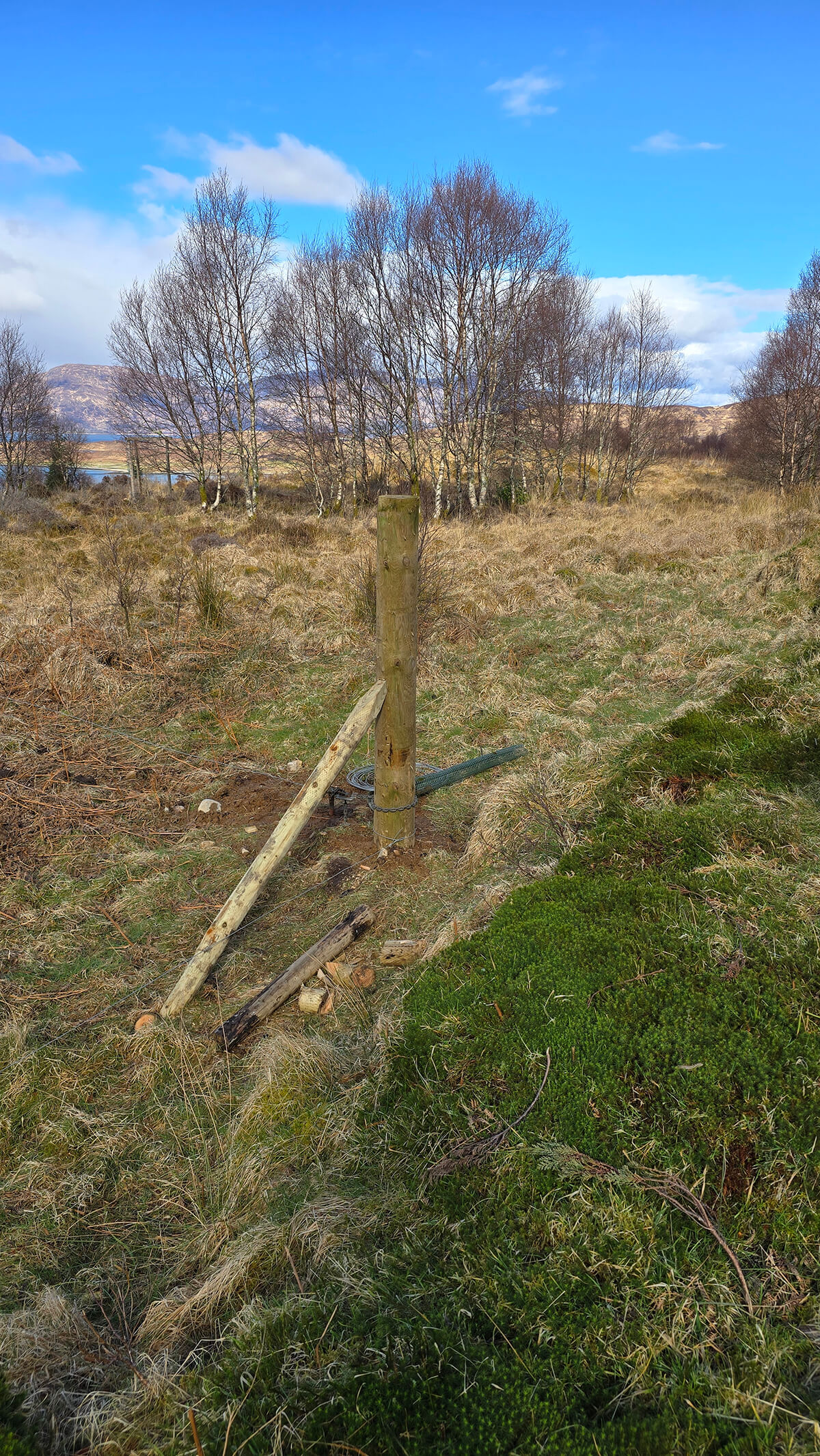
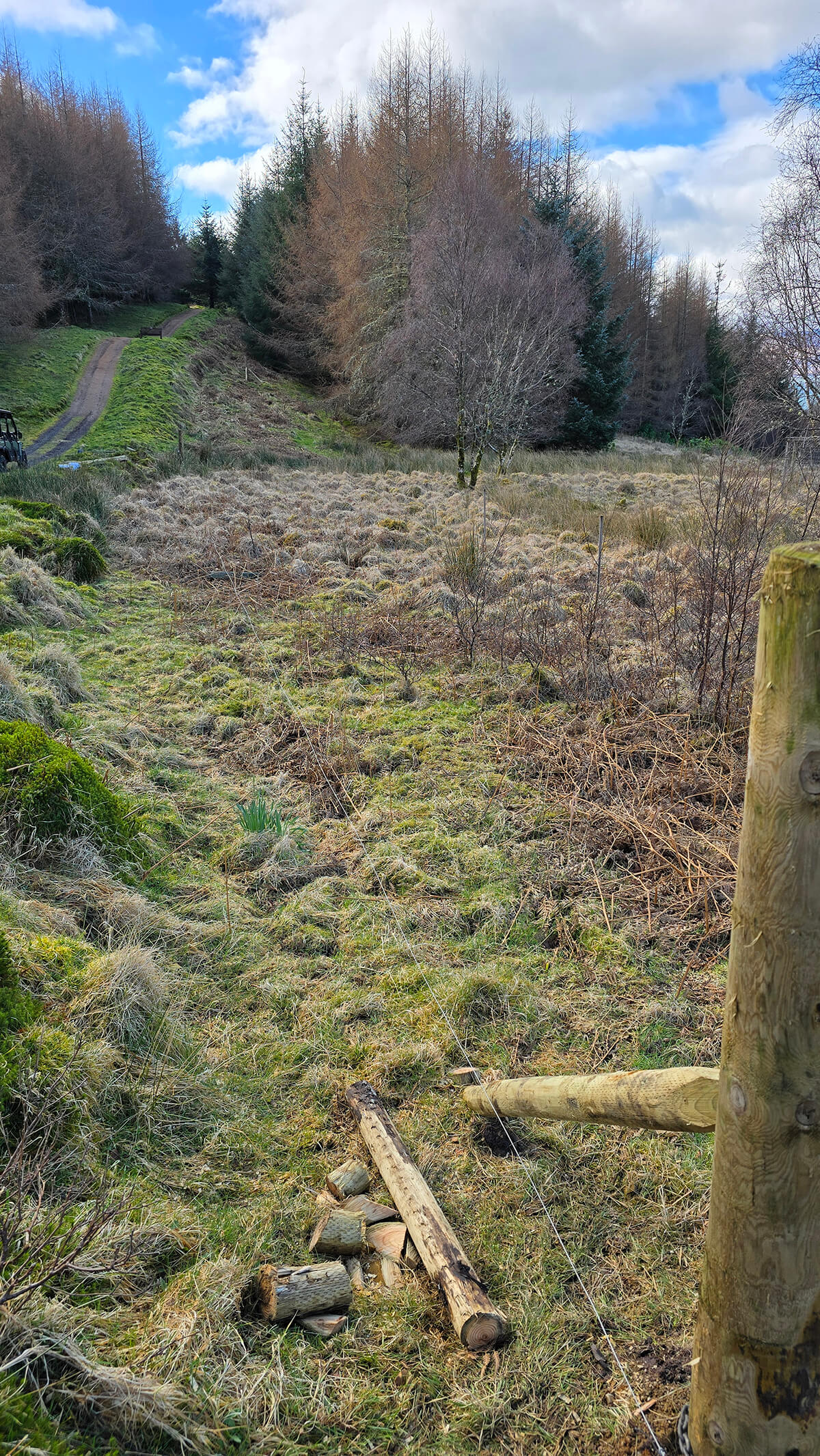
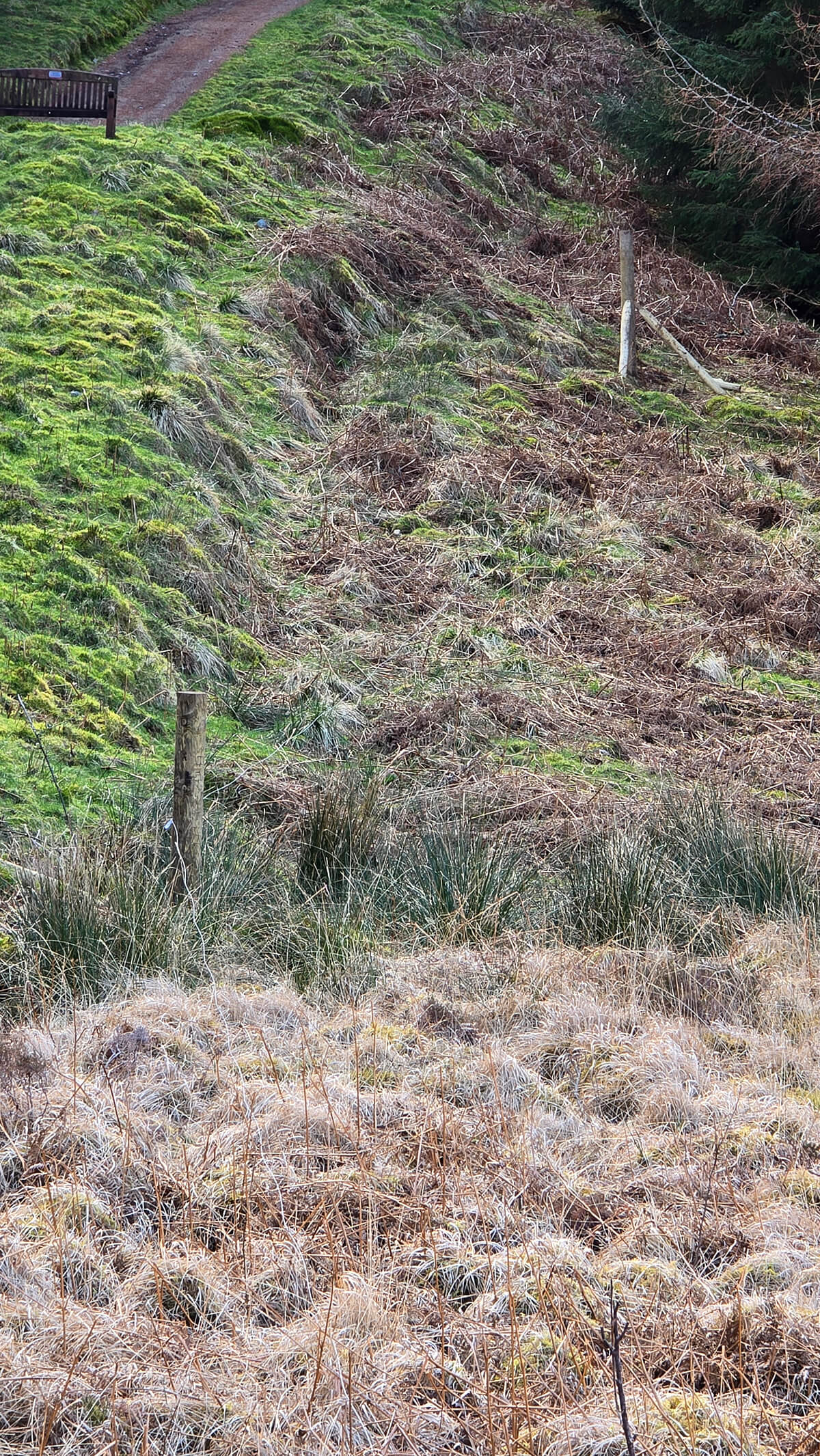
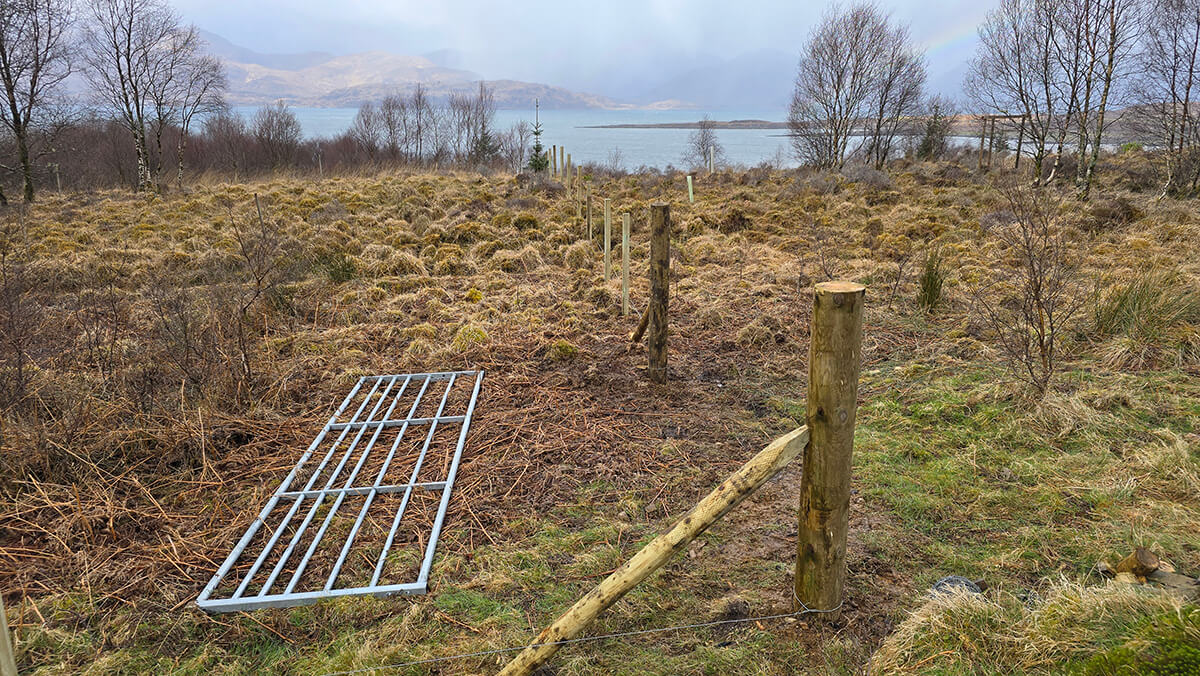
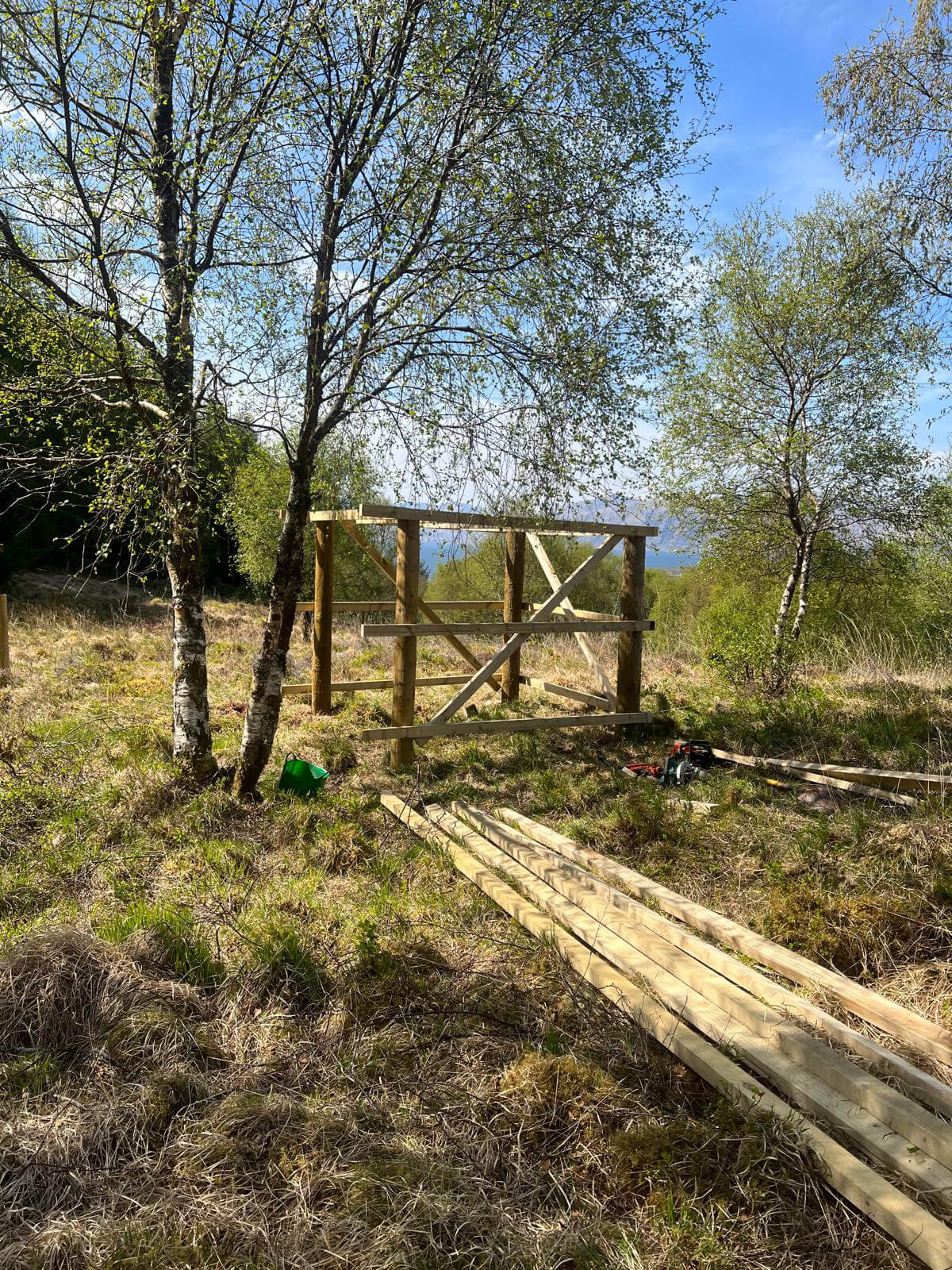
We’ve also begun extending the boys’ enclosure, adding extra drainage, and creating a hard-standing area to keep their hooves happy and healthy. All these projects are made possible thanks to the wonderful support of the Adopt a Highland Cow scheme!


Photo Gallery
The Boys




Visitors




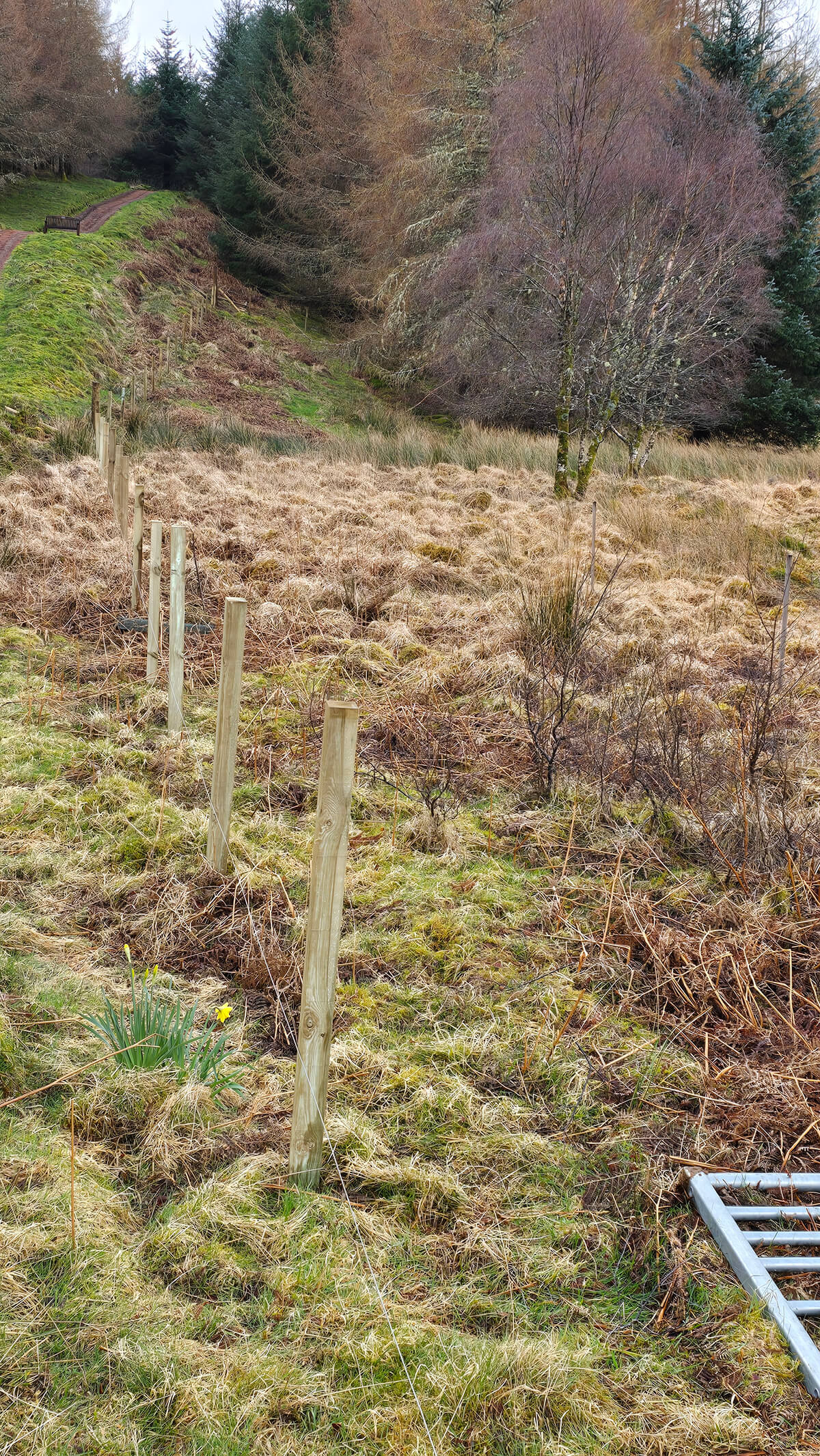
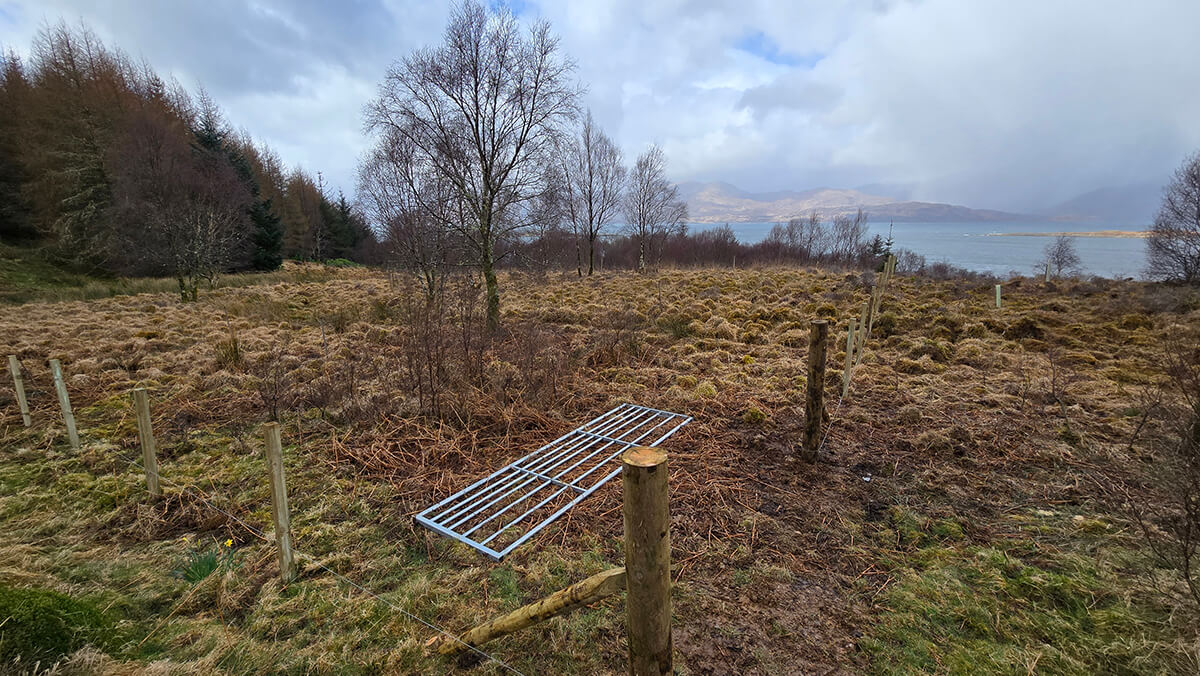
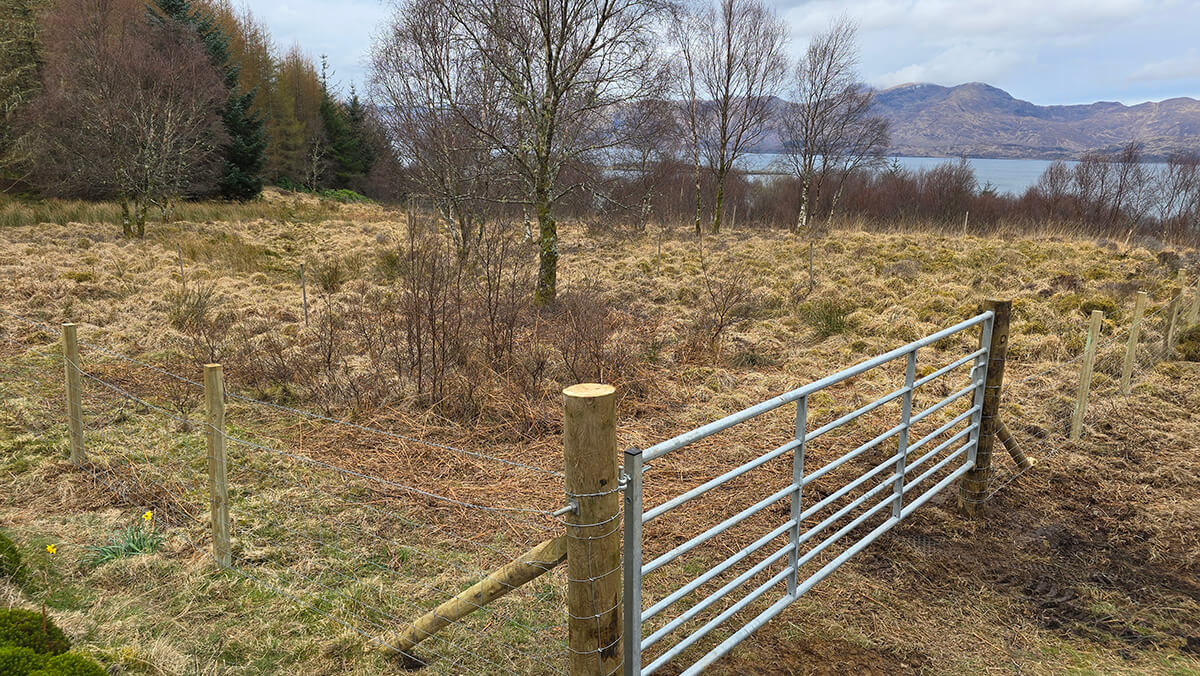
Enclosure Construction


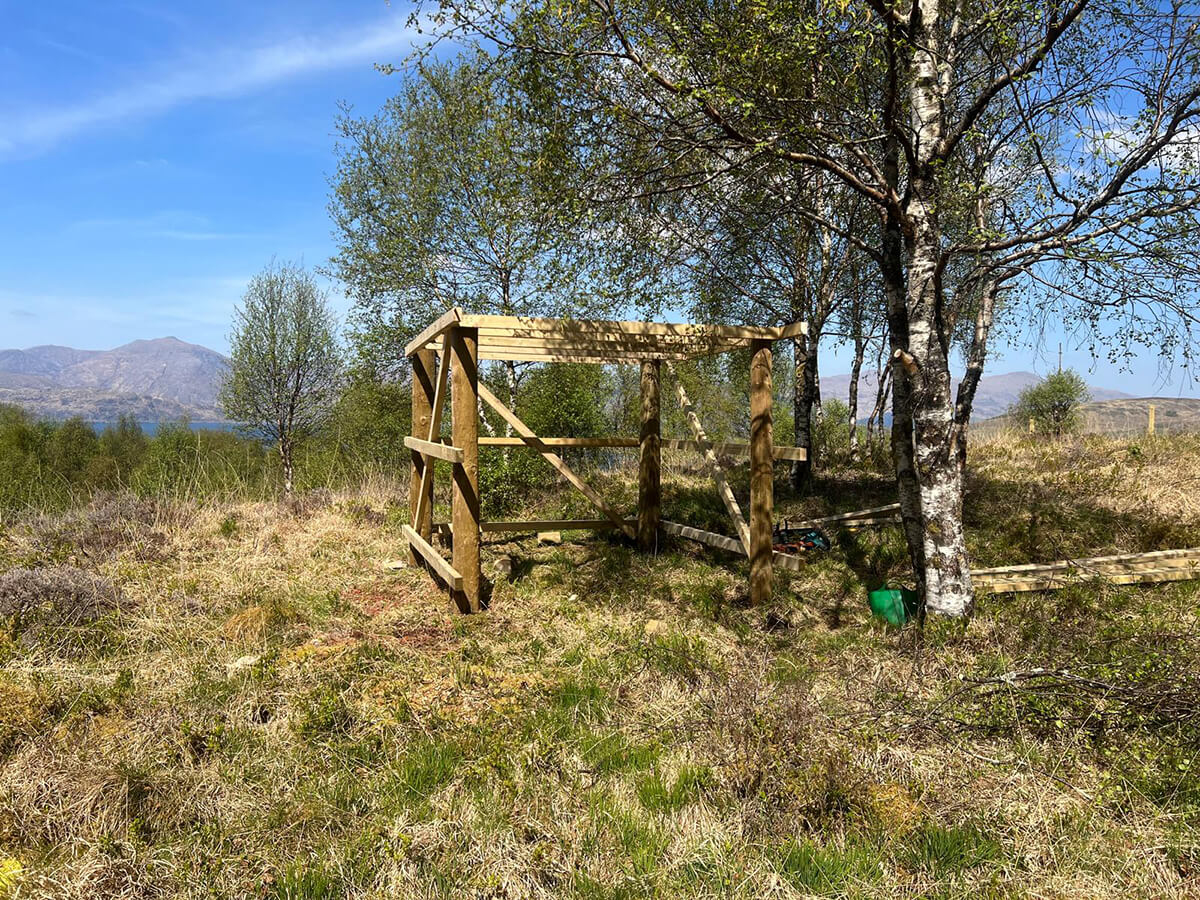
Shelter Construction



Video Gallery
Fun Facts
- Highland Cows are the oldest cattle breed in the world, appearing in the 6th century in the Outer Hebrides.
- You might have heard the term “the drove road” used in Highland history. These were the tracks through the Highlands where the farmers would take their cattle to market. They could only walk a few miles each day so would stay in different places every night so the animals could graze and stay safe. Ever heard the term, “arriving in droves?” We aren’t completely sure, but it may well have come from this.
- Back in the 18th century, cattle thieving was a huge problem. The clans were terrible for pinching each other’s cattle. Watches were set up, which farmers would pay to get their cows back. Rob Roy MacGregor operated as a watch, drover, cattle dealer and sometimes, a thief himself!


- Highland cows are often identified but their very impressive horn-age. These cows have whopping horns on their heads, which are very powerful, so don’t get too close or you might be skewered. Their horns serve a multitude of purposes though, helping them to rake up the snow and forage for food in the winter. Male horns are thicker than female horns, and they curve forward with a slight upwards rise near the tip of the horn. Female cows have thinner horns that have a more obvious upwards curve.
- Asides from their massive horns, Highland Cows are also known for their long, shaggy coats. These cows have two layers of long shaggy fur, the warm undercoat and the more oily overcoat. This helps to keep them cosy in the winter.
- Apparently, Queen Victoria, when visiting the Highlands is said to have commented that she liked the red coloured cows the best, so to try and please her highness, cows were selectively bred in that colouring. That is part of the reason we see so many ginger cows.
- The original coat colour of Highland cows was black, but the Victorians selectively bred for ginger cows, which led to the burnt orange colour most commonly seen today. White Highland cows, although rarer, are also part of the breed’s natural variation.
- Black is a dominant gene, meaning breeding two black cows usually results in black calves. However, red calves can still appear if both parents carry the recessive red gene.
- Breeding two red cows will always produce red calves, as they do not carry the dominant black gene. White calves, though uncommon, can occur depending on the genetic makeup of the parents.
- The range of coat colours in Highland cattle—including black, ginger, red, brindle, white, and even dun—reflects the rich genetic diversity of this historic breed.


- When a Heilan Cow gives birth, the calf will be able to stand and walk straight away and instantly recognises its mum. Mummy cow will look after and care for her baby for about 6 months, then it’s on its own. But by that point, it’s usually pretty big.
- The most known Highland Cow breed is usually ginger however there are also breeds with yellow, silver, white, red and black coats. The most common breed in the Highlands is the ginger one and they definitely fit well with the backdrop of dramatic Highland scenery.
- Highland Cows eat heaps. In fact, when they’re not sleeping, they’re usually always eating. They spent 8 hours a day munching away and consume almost 70kg of grass a day! That is the equivalent to about 70 pineapples in weight. They need it though, these are big cows.
Our Coo Shop
Don’t forget we also offer a wide range of Highland coo merchandise! The perfect accessory for any cow fan.